Concrete driveway building in Yakima WA - a slab built for hard winters
Cracked, sinking or flaking driveway? We dig out, pack a firm base and pour a new slab sized for what you park.
- Licensed and fully insured.
- Free in-person estimates.
- We respond within 1 business day.
What goes into building a concrete driveway in Yakima?
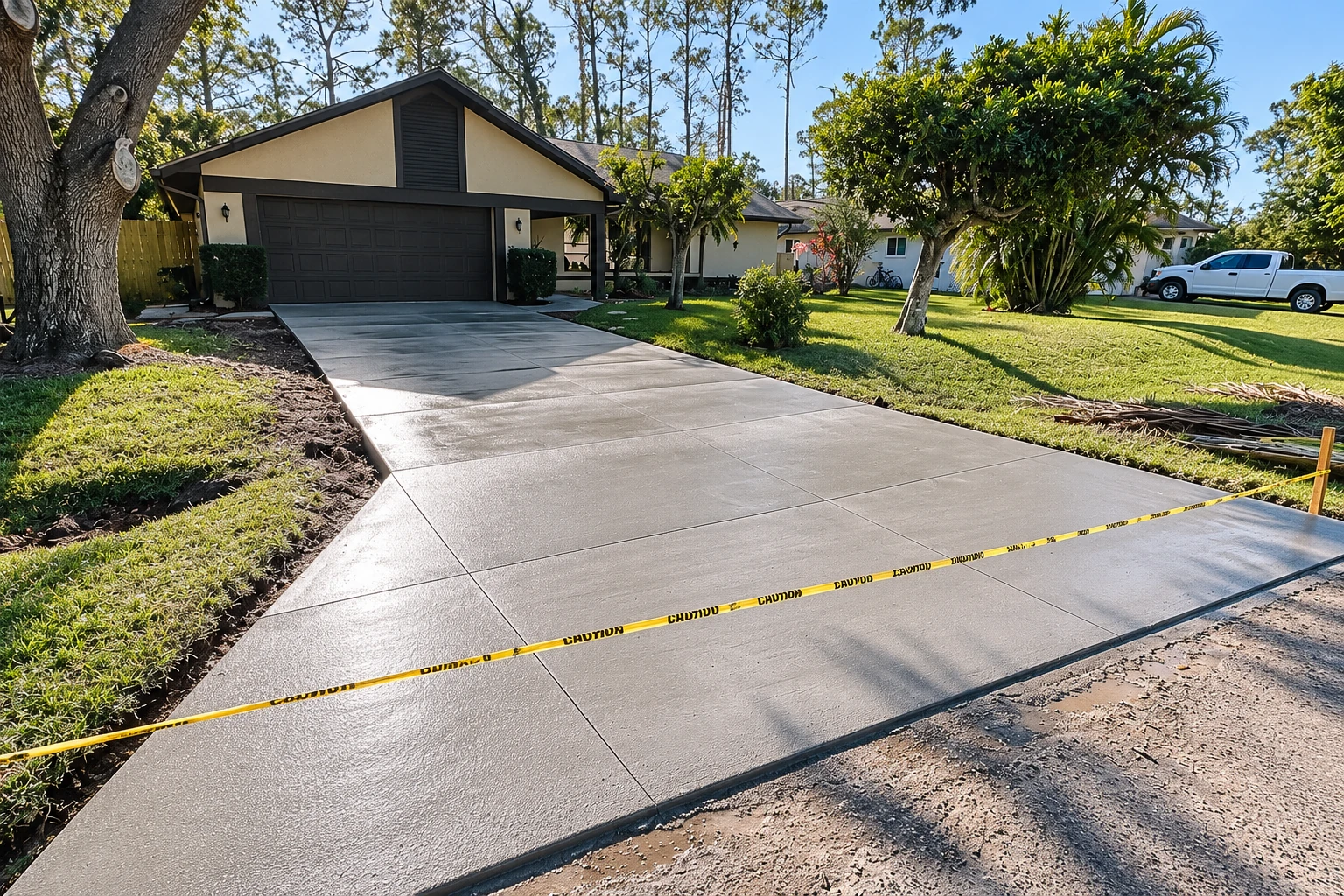
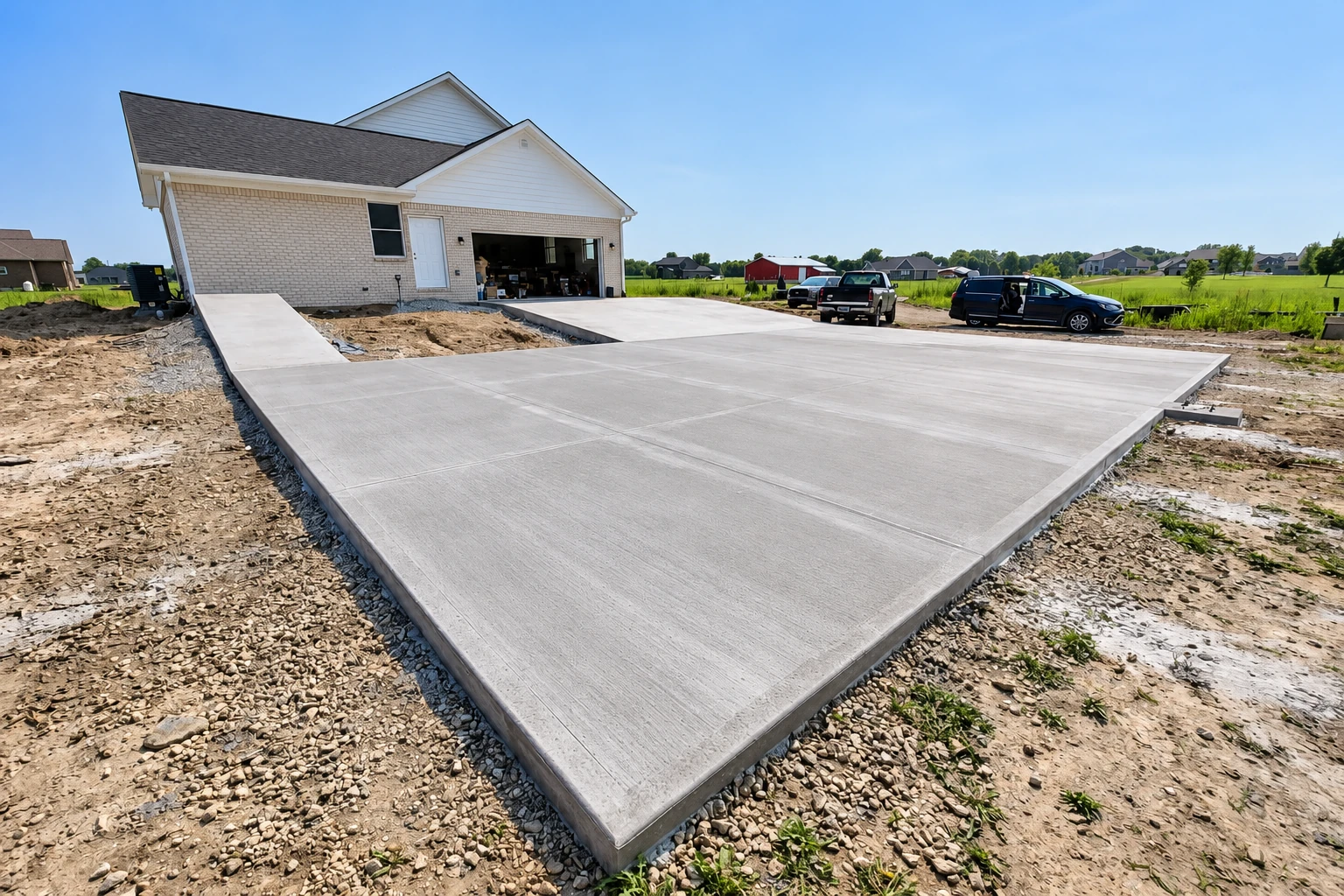
Concrete driveway building in Yakima means digging out to firm ground, packing an even base and pouring a slab thick enough for what you park, so the weight spreads out instead of flexing and cracking it. At United Yakima Concrete, we build new driveways and replace worn-out ones, and most of the time goes into the prep and the cure, not the pour itself.
Most people who call us have a driveway that's cracked, sunk at one end or flaking on top, or they've built a house and need one poured from scratch. The price moves with the size, how thick the slab has to be for what you park, whether rebar goes in, whether an old driveway has to come out and how much work the approach at the street needs. The schedule turns on the permit for that approach, the weather and the curing time, and the estimate is where you get the figure for your driveway.
How do you know your driveway needs replacing?
Cracks that keep growing
Hairline cracks that widen every spring usually mean the base moved or the slab had no joints to crack along. Water gets in, freezes and pries them open, and once pieces start breaking loose, patching only buys you a season or two.
Sunken or tipped sections
A slab that drops at one corner or tips toward the garage usually sits on dirt that was raked level instead of dug out and packed. Water then pools against the house, and the longer it soaks into what's under the slab, the faster the rest of it follows.
Flaking or dusty surface
When the top chips, flakes or turns to powder, it was usually poured in midday heat or finished too wet, so the top layer came out weak. Every winter peels a little more off, and a worn-out surface can't be coated back to good.
How we build a concrete driveway
The first thing I ask is what you'll park on it, because a work truck or an RV changes the slab we bid, and we sort out the approach at the street before anything else gets scheduled. If there's an old driveway, we break it out and haul it off. Then we dig past the loose dirt to firm ground and pack the subgrade, the soil the slab sits on, because even support under the whole slab matters more than a few hard spots. We check where the water runs and set the forms so the slab falls away from the house, and where the job calls for rebar, the steel bars that hold a slab together if it does crack, we tie it in before the truck shows up. We pour early in the day so summer heat doesn't leave a weak, dusty top, give it a broom finish, a light texture for grip when it's wet or icy, and cut control joints, shallow grooves that tell the slab where to crack, before it can pick a spot on its own. Then it cures, which is the slab slowly gaining strength while it stays damp. If you're trimming the budget, the base is where most people want to cut, since you can't see it on day one, and it's the one place I won't, because a nice finish on a poorly packed base settles and cracks with the dirt under it.
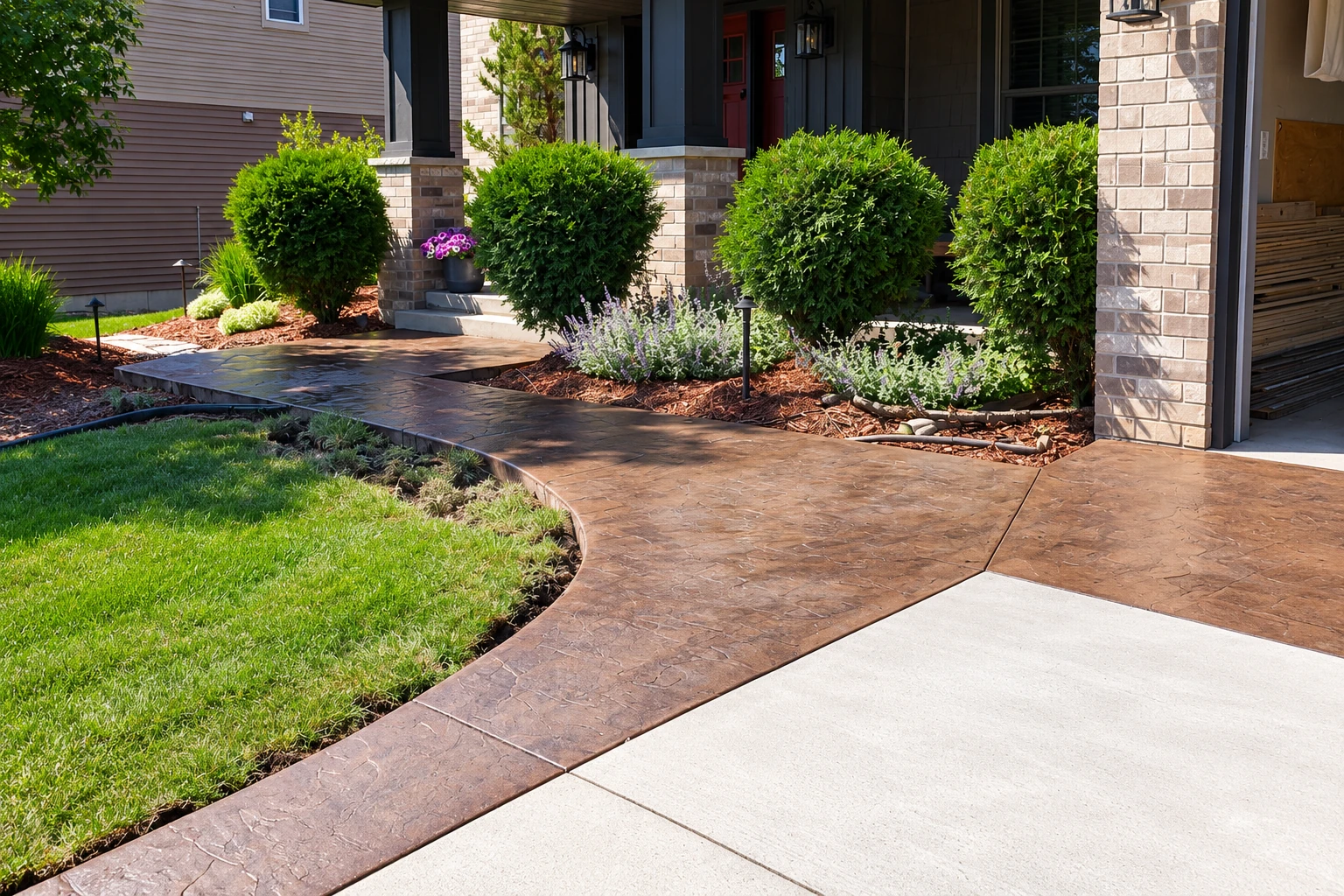
Driveway work often runs into the rest of the yard. If the concrete continues around the side of the house, we can pour a concrete patio in the same stretch of work, and if you want the front to look like more than a gray rectangle, stamped concrete can go along the borders or across the whole driveway.
Standard slab for cars
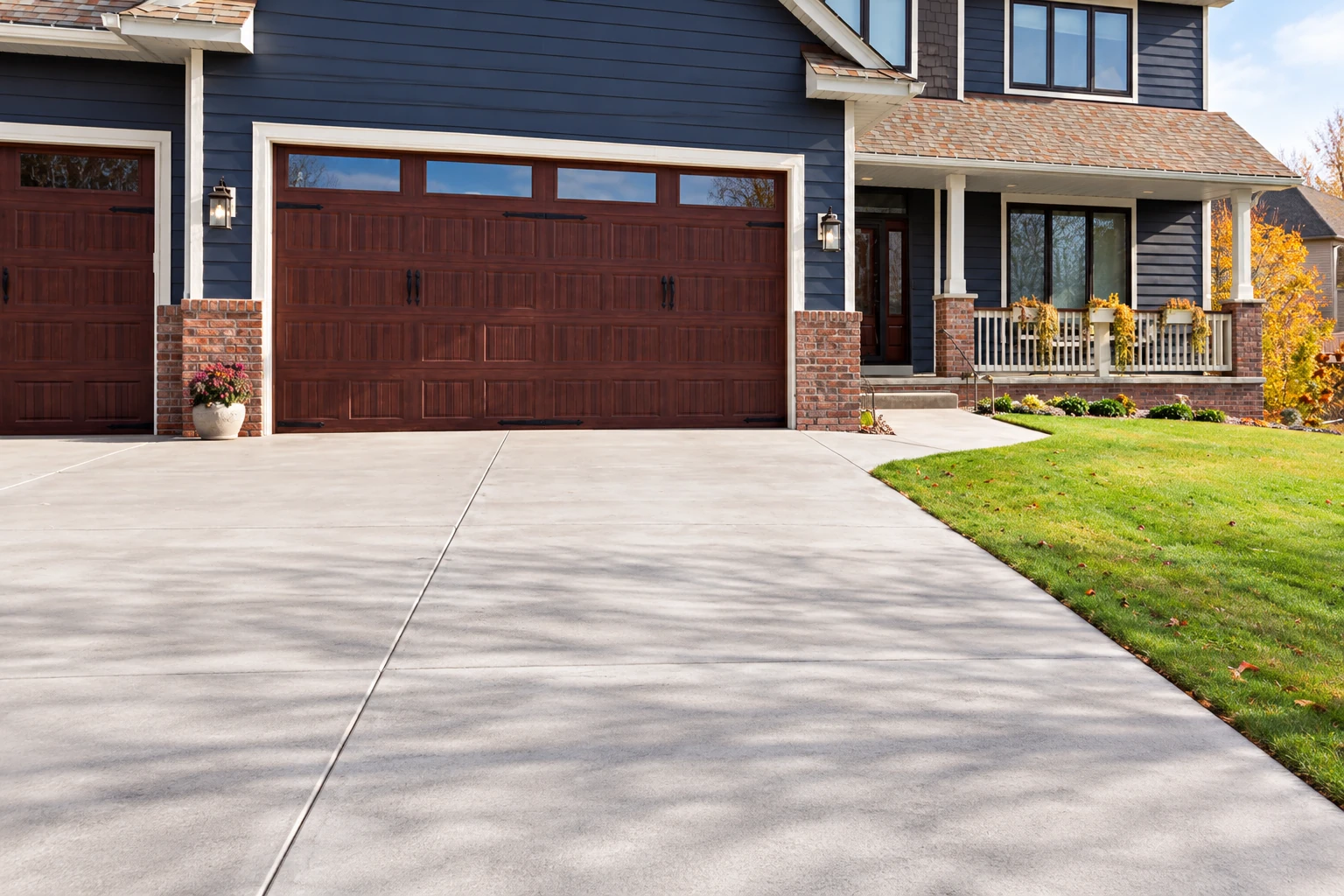
This fits most homes where the driveway carries cars and everyday pickups. It gets the same dug-out, packed base as anything we pour, because a thin slab on soft ground is where cracks start.
Heavier slab for trucks and RVs
If you park a work truck, a trailer or an RV, we bid a thicker slab and usually add rebar, so the weight spreads out instead of breaking the edges. It costs more up front, and it costs a lot less than tearing out a slab that was built for a sedan.
Get a written estimate for your new driveway
We respond within one business day to set up a visit. The estimate is free, done in person at your place and comes with no obligation, written out so you can see exactly what you're paying for.
Call (509) 452-5002- Based in
- Yakima, WA 98901
- Hours
- Mon–Fri: 6 AM–10 PM, Sat–Sun: 8 AM–10 PM
What happens when you call about a driveway in Yakima?
Here's how a driveway job goes from your first call to the day the forms come off.
Call or send the form
Call (509) 452-5002 or send the form and tell us a little about the driveway. We set up a time for me to come out and see it.
I measure and look it over
I measure, look over the slope and the approach, and ask how you'll use the driveway. You get a written estimate with the mix, the prep and what's included spelled out, so you can hold it next to any other bid line by line.
We handle the permit side
Once you say go, we take care of the permit side, then prep and form the job. From November 1 through March 31, paving under the city's street permit has to be approved by the city's engineer, so winter approach work can take longer to get on the calendar.
We pour, finish and clean up
Our crew pours and finishes the slab, and I'm on site for the pour and the cleanup. After that the concrete needs its cure, which the questions below cover.
Why Yakima homeowners call United Yakima Concrete for driveways
I come out and write it
I look at every driveway myself and write the estimate, and I'm on site for the pours while our crew digs, forms and finishes. You talk to the person who'll be standing there when the concrete truck backs in.
Flatwork in the valley since 2013
I learned on a flatwork crew here in the valley, pouring driveways, patios and walks for other outfits, before starting this business in 2013. The winters here teach you fast what a slab needs underneath it.
Licensed and fully insured
We're licensed and fully insured on every job we take. Check that with anyone you're thinking of hiring, us included, and the questions below show you how.
The part that matters most on a driveway is the base nobody sees, so that's where I start when I come out. Ask for an estimate or call (509) 452-5002.
Driveways and street approaches in Yakima
In Yakima, any work in the street right-of-way needs an excavation permit from the city, and that includes adding or changing a driveway approach, the stretch where your driveway meets the street. Some addresses around here fall under the city and some under Yakima County, so I check which office covers yours and what it asks for on your job. We handle the permit paperwork for our part of the work, and you hear plainly where things stand before we set a pour date.
Winters here freeze and thaw over and over, and the city rates local weathering as Severe. For that kind of exposure, a national concrete industry group advises air-entrained concrete, a mix with tiny air bubbles that give freezing water room to expand, so look for it named on any written bid. That's why I put the mix right on our estimate, on jobs from Ellensburg down to Grandview.
Questions about concrete driveways in Yakima
Call (509) 452-5002A concrete driveway in Yakima usually runs about $6 to $12 per square foot, not counting removal of an old driveway. Reinforced concrete costs more per square foot than unreinforced, and tearing out the old slab adds to the total. The written estimate I bring back gives the number for yours.
Four to five inches is the standard for a Yakima driveway, and that's usually enough for ordinary cars. If you park heavier trucks or an RV, a six to eight inch slab may be the better choice, so tell me what you park when I come out.
Yes, adding or changing the approach where your driveway meets the street takes the city's excavation permit described above. The city also requires whoever applies to be licensed in Washington to build public improvements and to hold a City of Yakima business license, so ask about both before you hire anyone for approach work.
Above 40°F, most concrete should cure for at least 7 days, or until it reaches 70% of its specified strength. In cold weather the slab needs protection from drying out for longer, because low early strength and fast drying make early cracks more likely.
Not the first winter. A national concrete industry group advises skipping deicing chemicals for the first winter and using them in moderate amounts after that. If your driveway goes in late summer or fall, that first winter comes quickly, so plan for it.
Look the business up on the state's contractor lookup before you sign anything. Washington requires every construction contractor to register with the state Department of Labor & Industries and to be bonded and insured, and the lookup shows whether a registration is active, whether workers' comp is paid up for any employees, and any safety violations or lawsuits against the contractor's bond.
Related concrete work around your driveway
Concrete patio construction
If you'd like a place to sit out back, pouring the patio while our crew and the concrete trucks are already here can save a second setup.
Stamped concrete services
When plain gray doesn't suit the front of the house, stamped concrete adds a stone or brick pattern and color to a border, walkway or entire driveway.
Service areas for driveway work around Yakima
United Yakima Concrete is based in Yakima, WA, and we build driveways in the cities around it. Eight of them have their own page here, including Selah and Union Gap, and we take calls from plenty of places in between.
Yakima, WA
Book a site visit for your driveway
Tell us the driveway size, what you park on it and whether an old slab comes out, and I can show up ready to talk about your actual job.